A launch pad at Russia’s main space complex was damaged during Thursday’s launch of a mission carrying two Russians and an American to the International Space Station, Moscow’s space agency announced.
The Soyuz MS-28 spacecraft successfully docked with the space station and the three crew members had boarded, Roscosmos said.
But a post-launch inspection at the Baikonur Cosmodrome in Kazakhstan revealed “damage to several elements of the launch pad,” according to a statement from Roscosmos, which still uses the space facility in its former Soviet neighbor.
“An assessment of the condition of the launch complex is currently underway,” it said, adding that all parts needed to repair the pad are available.
“The damage will be repaired in the near future.”
The launch pad contains support systems for the rocket and a structure that allows cosmonauts to access their capsule as it sits atop a Soyuz rocket.
Launch pads must be capable of withstanding extreme heat, air pressure and vibrations as a rocket takes flight.
Russian analysts said repairs to the launch pad could take a week or longer. And any lengthy delay could leave Russia unable to launch missions to the space station, they said.
“In the worst case this could seriously affect the rotation of crewed missions and cargo flights to the ISS,” analyst and blogger Georgy Trishkin wrote on Telegram.
Typically, ISS crew are launched roughly every six months from Baikonur.
“This is the only launch pad Roscosmos uses for the ISS program, and in the future it was supposed to be used for launches to the Russian Orbital Station,” commentator Vitaliy Egorov wrote on Telegram.
“In effect from this day Russia has lost the ability to launch humans into space, something that has not happened since 1961. Now it will be necessary to quickly repair this launch table or modernize another one,” Egorov wrote.
Besides Russia’s Soyuz craft, NASA uses SpaceX’s Dragon spacecraft to take crew to the ISS.
The three men aboard the mission that lifted off Thursday join seven other crew already orbiting on the ISS.
Three are scheduled to return to Earth by December 8, according to NASA.
For more CNN news and newsletters create an account at CNN.com
LATEST POSTS
- 1
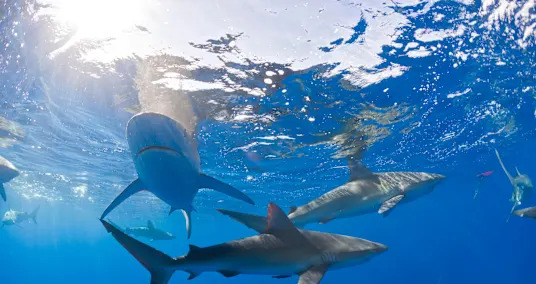
 Cocaine, caffeine, painkillers consumed by sharks in Bahamas, study finds
 - 2The largest sun of 2026 rises today as Earth draws closest to our parent star
- 3Shipping: The Corridors of Trade and the Coming of Another Period
- 4Instructions to Perceive and Grasp the Early Side effects of Cellular breakdown in the lungs
- 5Hostages as leverage: Iran's secret demand aimed at crippling Israel's agriculture


- Vote in favor of your #1 Kind of Cap
- Manual for Famous people Known for Their Altruistic Endeavors
- Exploring Being a parent: A Survey of \Bits of knowledge and Guidance for Guardians\ Nurturing Book
- CVS forecasts 2026 profit above estimates on strong performance
- Russia confirms 16 Cameroonian soldiers killed in Ukraine war
- Songbirds swap colorful plumage genes across species lines among their evolutionary neighbors
- New Gaza militia declares war on Hamas: 'Your dirty shoes are more honorable'
- Carry Nature Inside with These Staggering Plant Decisions
- Germany unveils rescue plan for struggling chemical sector